

- By MuggleNet Editorial Staff
- 20 Jul, 2026
- Latest
Looking for the full picture? Visit MuggleNet’s complete guide to HBO’s Harry Potter TV series for release date updates, teasers and trailers, streaming details and the latest news.
One of the biggest talking points surrounding HBO’s upcoming Harry Potter series has been its first teaser, with many viewers debating the show’s more grounded visual style. Now, director of photography Adriano Goldman has offered the clearest explanation yet for why the series looks the way it does and why some of those early scenes almost appeared even bleaker.
Speaking with filmmaker Andre Pilli, Goldman discussed the creative decisions behind the show’s look, revealing that Harry’s life with the Dursleys was intentionally designed to feel more subdued before audiences experience the magic of Hogwarts for the first time.
Making Harry’s ordinary world feel ordinary
Goldman said he strongly advocated for portraying Harry’s early life as difficult rather than picturesque.
“I personally argued strongly that Harry’s first phase, when he is still with his aunt and uncle, what I call real life, should try to convey that it is a hard life for him.”
That philosophy led to conversations about how much color the opening episode should have, especially since most of the premiere takes place before Harry ever reaches Hogwarts.
“We recently had a discussion about exactly that—how colorful and vibrant, or how much sadder, the first part, especially the first episode before he goes to Hogwarts for the first time, should be.”
Goldman worried that making those scenes too visually cheerful would lessen the emotional impact of Harry finally discovering the Wizarding World.
“If we keep going like this, the first episode practically doesn’t have Hogwarts—it only reaches Hogwarts at the very end, so there is no journey. If everything is pretty, colorful and cheerful, what is the audience supposed to perceive?”
Instead, his goal was to create a clear visual journey from the muted, restrictive world of Privet Drive to the excitement and wonder waiting beyond it.
Even the teaser evolved
Goldman also revealed that the show’s look continued to change during post-production as different creative voices weighed in on the final color grading.
“The whole process was worked out, imagined and thought through so that it would be grounded, more realistic, more tangible.”
At one point, he said the footage now seen in the teaser was considered too blue and too melancholy.
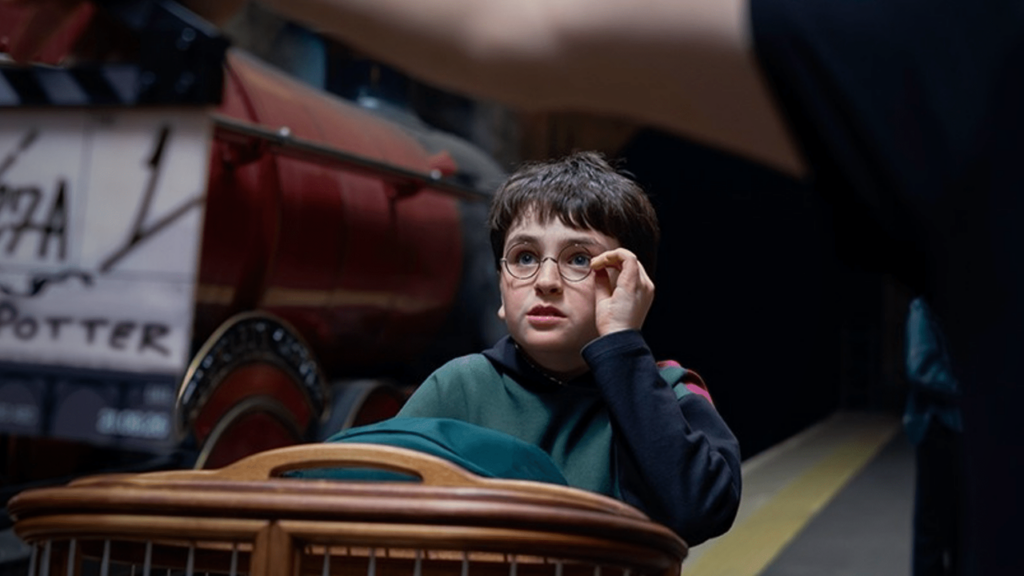
“That image of Harry we’re looking at now, that’s the one in the trailer. They considered it too blue, too sad.”
As a result, some scenes were subtly adjusted. Wallpaper became warmer, clothing gained more saturation, and Harry himself was given a slightly healthier complexion while still preserving the grounded aesthetic Goldman preferred.
For the cinematographer, those restrained opening scenes only work if there’s a dramatic payoff once Harry enters the magical world.
“When we reached the end and he walks into Diagon Alley, where everything is colorful, alive and joyful, they said, ‘Ah… now I understand the transition.'”
For longtime readers, it’s a philosophy that echoes the first novel itself. Harry’s ordinary life isn’t supposed to compete with Hogwarts, it exists instead as a contrast to make arriving there feel extraordinary. Who can forget the magic they felt when Hogwarts was first revealed?
Filming a series centered on young actors brings unique challenges
The interview also offered a glimpse into the realities of producing one of television’s most ambitious series.
Goldman said the production schedule demands meticulous planning because the young cast can only spend limited time filming before returning to their on-set education. Warner Bros. Studios Leavesden has also established an on-site school for young performers, allowing cast members to continue their education while production is underway.
“You have to shoot really fast, and the faster you go, the more you compromise quality. There’s no way around it… The kids’ screen time is really brutal.”
To make the most of that time, crews complete as much technical preparation as possible before the young actors arrive on set.
“You practically have to pre-shoot all the scenes while they’re in class.”
That preparation includes work such as rehearsing camera movements, setting lighting, and blocking scenes with stand-ins so filming can move quickly once the principal cast is available.
With each Harry Potter novel expected to receive an entire television season, Goldman suggested that balancing ambitious filmmaking with the responsibilities of working alongside child actors requires an extraordinary level of planning. If his comments are any indication, viewers may soon discover that the visual journey from Privet Drive to Hogwarts has been just as carefully crafted behind the scenes as it is on screen.
About MuggleNet: MuggleNet has covered the Wizarding World since 1999, offering news, guides, editorials and fan resources for readers around the world.