

- By MuggleNet Editorial Staff
- 11 Oct, 2026
Magic has always been capable of extraordinary things. It can heal injuries, protect entire communities, and accomplish feats that would seem impossible to the Muggle world. But for as long as witches and wizards have wielded magical power, some have used it for darker purposes.
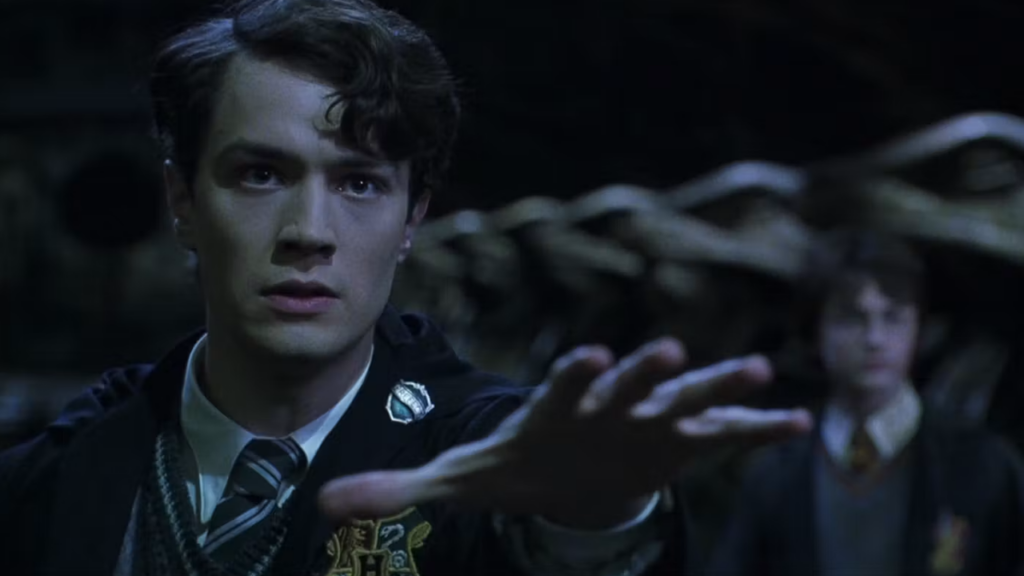
The Dark Arts are among the oldest and most dangerous branches of magic in the wizarding world. From ancient curses and forbidden experiments to the rise of Gellert Grindelwald and Lord Voldemort, their history is one of ambition and the pursuit of power at almost any cost.
And while Hogwarts has long taught students to defend themselves against the Dark Arts, the school itself has not always been immune to their influence.
So where did the Dark Arts begin, how did they evolve, and why have they remained such a persistent part of magical history?
What Are the Dark Arts?
The term Dark Arts describes forms of magic primarily intended to harm, control, or kill. They encompass more than a collection of dangerous spells, extending to cursed objects, sinister potions, certain magical creatures, and rituals capable of inflicting extraordinary damage.
It’s important to note that not every hex or jinx belongs in the same category of severity. A relatively minor jinx might inconvenience its target, while a powerful curse could cause permanent injury or death. Some especially dangerous Dark magic can leave injuries that ordinary magical healing cannot reverse.
What makes the Dark Arts particularly frightening is that their consequences can extend beyond the immediate victim. Certain practices can corrupt the person performing them, while others create magical effects that endure long after their original caster has died.
The three Unforgivable Curses are perhaps the most recognizable examples:
- The Imperius Curse (Imperio) allows a witch or wizard to control another person’s actions.
- The Cruciatus Curse (Crucio) inflicts excruciating pain and can cause lasting psychological damage.
- The Killing Curse (Avada Kedavra) causes instantaneous death when successfully cast.
Their classification as Unforgivable reflects the wizarding world’s recognition that some forms of magic are so destructive that their use against another human being ordinarily warrants the severest punishment.
But these curses represent only one part of a much older and more extensive magical tradition.
Ancient Dark Magic: The Earliest Known Practitioners
The precise origins of the Dark Arts remain unknown. Magical history has preserved the names of certain early practitioners, but there is no confirmed date when Dark magic was first discovered or deliberately developed.
One of the earliest known Dark wizards was Herpo the Foul, an ancient Greek wizard whose magical experiments produced two particularly disturbing achievements.
Herpo is credited with creating the first known Basilisk, a gigantic serpent capable of killing with its gaze. He achieved this by hatching a chicken egg beneath a toad, demonstrating how magical creatures could be deliberately bred for destructive purposes.
Even more terrifying, Herpo is recognized as the first known creator of a Horcrux.
A Horcrux is an object, or potentially a living being, used to conceal a fragment of its creator’s soul. Its creation requires things so foul, we still do not know the exact steps involved. Through additional Dark magic, the separated soul fragment can be secured within a chosen vessel.
The result is, in theory, protection against death. As long as a Horcrux survives, its creator remains anchored to the living world, even if their physical body is destroyed.
Herpo’s discoveries established a precedent that would reappear thousands of years later through Lord Voldemort.
They also revealed something fundamental about the Dark Arts: their most dangerous practitioners were not always motivated by a desire to harm others for its own sake. Some sought immortality, extraordinary power, or mastery over the natural limitations of magic. The suffering they caused was often treated as an acceptable price.
The Medieval Period: Dark Magic and the Founding of Hogwarts
By the time Hogwarts School of Witchcraft and Wizardry was established around the 10th century, questions about the responsible use of magic were already dividing the magical community.
The school’s four founders initially shared a vision of educating young witches and wizards. Unfortunately, their disagreements would eventually become one of the most consequential conflicts in magical history.
Salazar Slytherin believed that Hogwarts should admit only children from established magical families. His fellow founders rejected the idea, particularly Godric Gryffindor, who had once been among Slytherin’s closest friends.
Their dispute was primarily concerned with magical ancestry and who deserved an education, but it also intersected with disagreements about which forms of magic should be taught.
Slytherin secretly constructed the Chamber of Secrets beneath Hogwarts. It may initially have provided a private place to pursue magical studies, but its eventual purpose was much more dangerous.
Within the Chamber, Slytherin concealed a Basilisk that could be controlled by himself or one of his descendants. According to the legend that survived him, his heir would one day return to the school, open the Chamber, and unleash the creature against students considered unworthy of studying magic.
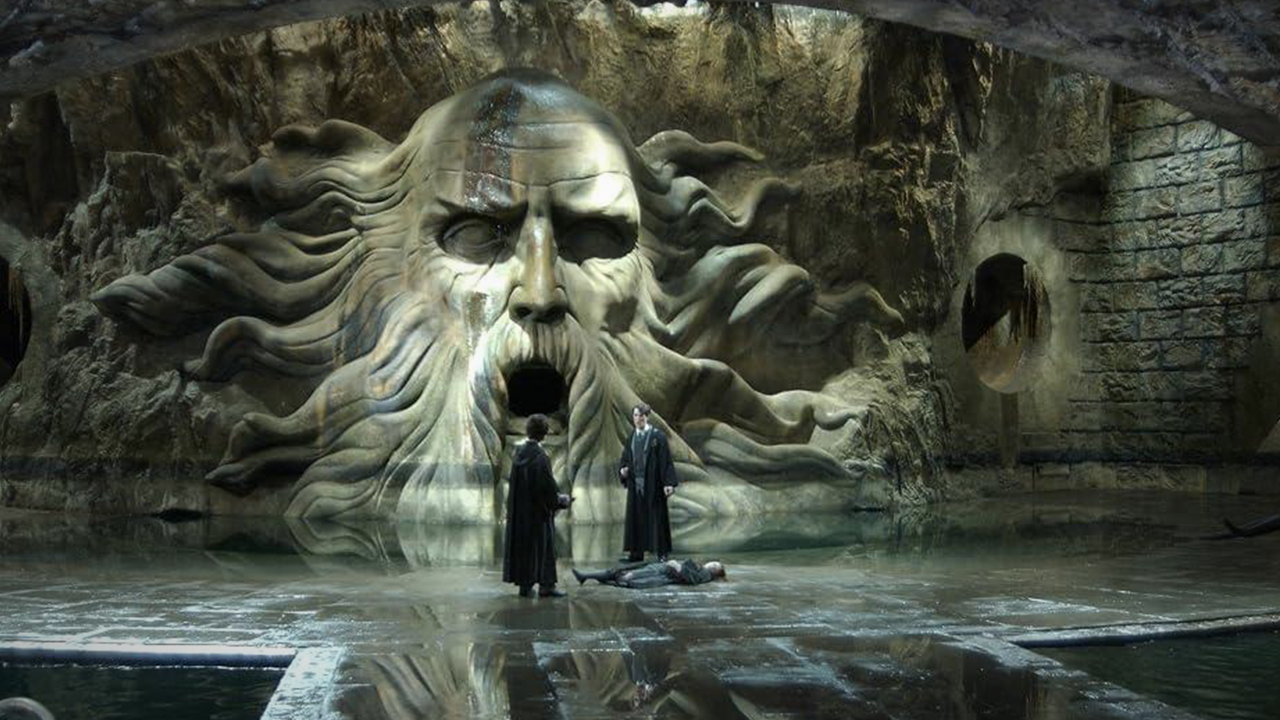
Centuries later, Tom Riddle would do just that.
Importantly, Slytherin’s actions did not make every member of his house a practitioner of the Dark Arts. Hogwarts would produce countless Slytherins who rejected his prejudices, including individuals who helped defeat Voldemort.
Dark Magic, Magical Secrecy, and the Rise of Pure-Blood Ideology
During the centuries that followed, the relationship between magical and non-magical communities underwent significant changes. Persecution, mistrust, and conflict contributed to the eventual adoption of the International Statute of Wizarding Secrecy at the end of the 17th century.
The Statute established the framework through which magical communities concealed their existence from Muggles. But not everyone welcomed that arrangement.
Some witches and wizards believed magical people should openly dominate the non-magical population rather than remain hidden from it. Their beliefs helped create an ideological foundation that later Dark wizards would exploit.
At the same time, influential pure-blood families accumulated wealth, political connections, and magical knowledge across generations. The Malfoys, for example, were particularly skilled at maintaining their position.
Their ancestor Armand Malfoy arrived in Britain with William the Conqueror during the 11th century, establishing a family presence that would endure for centuries. Later generations developed relationships with powerful Muggles when those connections benefited them, even as the family’s public attitudes increasingly favored magical superiority.
Not every member of the family practiced Dark magic, but its history reveals how prejudice and political influence could become intertwined.
Nicholas Malfoy, for example, was suspected of using the Black Death during the 14th century to conceal the deaths of troublesome Muggle tenants. Centuries later, members of the family would exercise significant influence within the Ministry of Magic.
By the time Lucius Malfoy joined Voldemort’s Death Eaters, the family’s involvement in the darkest corners of wizarding society was hardly an isolated episode.
The 19th and Early 20th Centuries: A Changing Wizarding World
Although the history of individual Dark wizards stretches back to antiquity, the surviving accounts of magical history are far more detailed when describing events of the late 19th and 20th centuries.
By this period, formal magical governments, international agreements, and institutions such as Hogwarts had established increasingly sophisticated ways of regulating magical behavior. The Dark Arts, however, had not disappeared.
Cursed objects continued to circulate, dangerous magical knowledge remained accessible to determined researchers, and certain families preserved traditions rooted in magical supremacy.
Shops such as Borgin and Burkes in Knockturn Alley would become associated with the trade in suspicious and potentially dangerous magical artifacts. Some of these objects were valuable because of their unusual enchantments. Others were designed specifically to injure, trap, or otherwise harm unsuspecting victims.
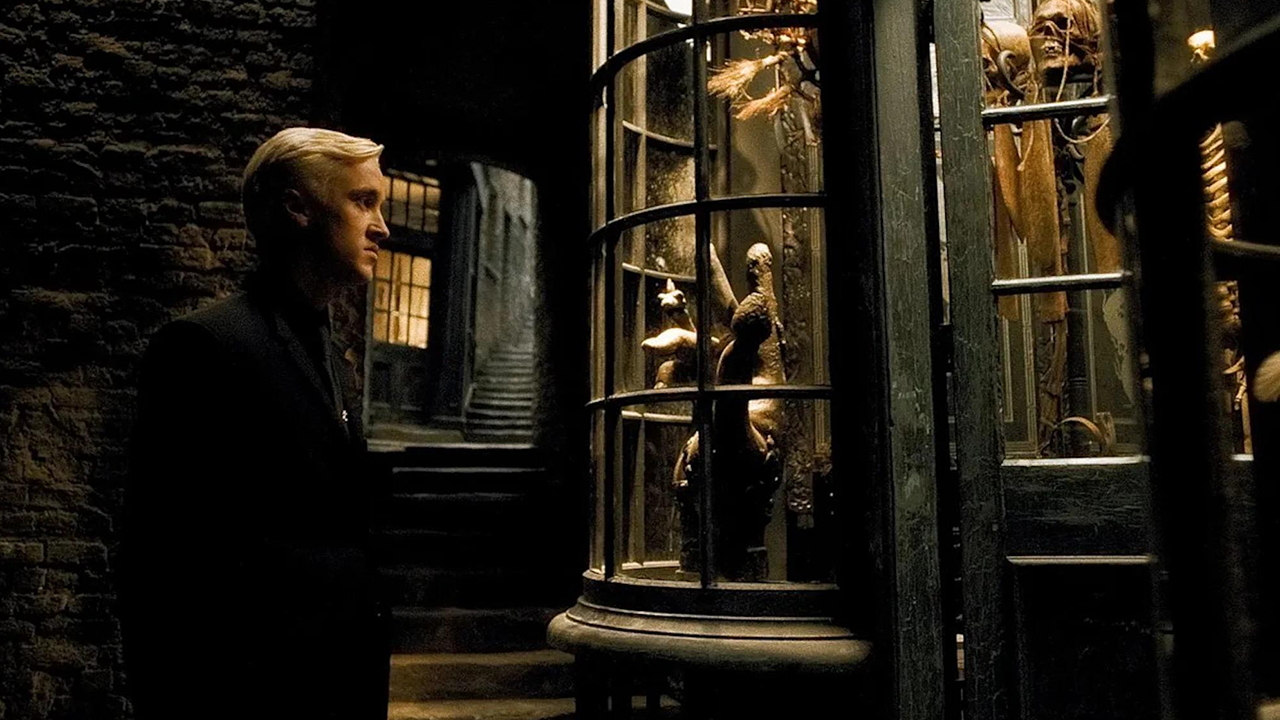
The continued existence of this trade demonstrated that Dark magic had a place within wizarding society even outside the activities of notorious Dark wizards.
It also raised an uncomfortable question: How could the magical community effectively combat the Dark Arts when some of their tools remained objects of curiosity, prestige, or commercial value?
Gellert Grindelwald: Dark Magic Becomes a Political Movement
Gellert Grindelwald emerged as one of the most dangerous magical figures of the first half of the 20th century. Unlike practitioners who concealed their darkest activities, Grindelwald sought to reshape the relationship between magical and non-magical society.
He believed witches and wizards should no longer remain hidden and that magical people were entitled to exercise power over Muggles. His ideology gained particular significance through his relationship with a young Albus Dumbledore.
The two brilliant young wizards met in Godric’s Hollow in 1899 and briefly shared an ambitious vision of transforming the magical world. Their ideas were justified through the phrase For the Greater Good, suggesting that even harmful actions could be excused if they served a supposedly beneficial future.
Their relationship ended amid a confrontation involving Dumbledore’s brother Aberforth and sister Ariana. Ariana died during the conflict, leaving Dumbledore with a burden of guilt that would influence him for the rest of his life.
Grindelwald continued his pursuit of power, eventually becoming the leader of an international movement that threatened magical communities across Europe. He also obtained the Elder Wand, one of the three legendary Deathly Hallows, whose reputation for extraordinary power made it especially desirable to ambitious wizards.
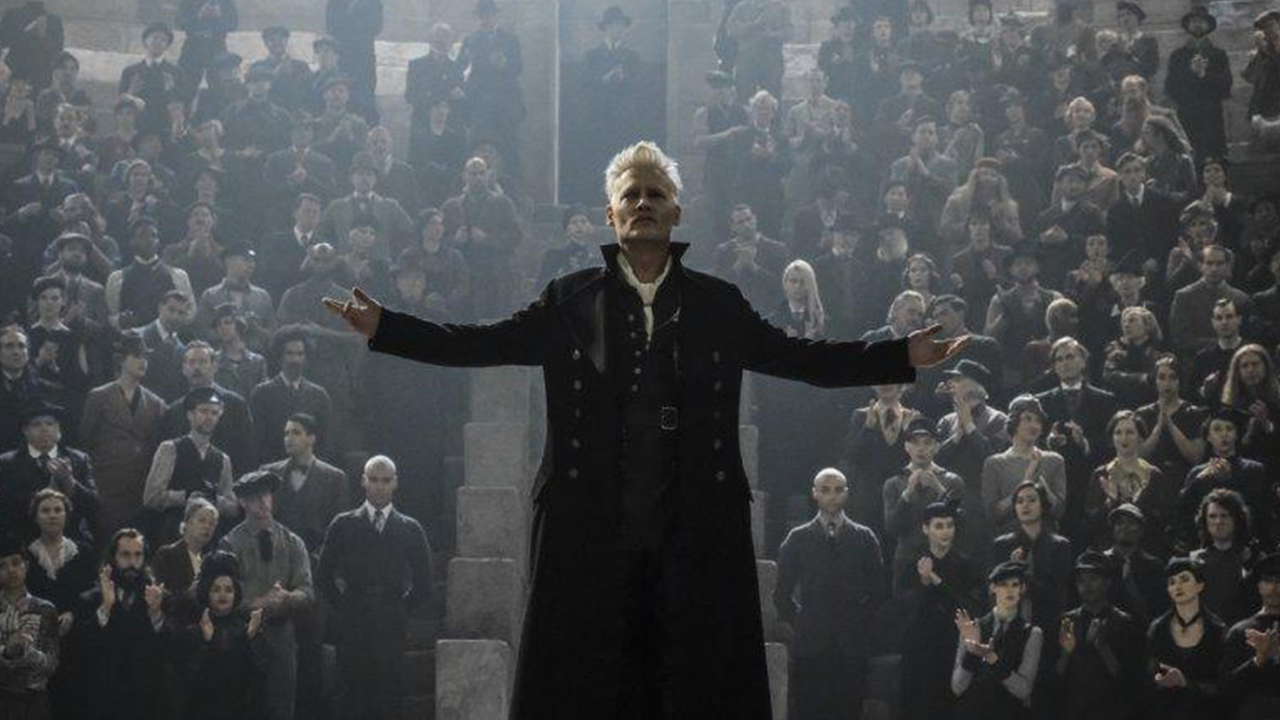
In 1945, Dumbledore finally confronted and defeated Grindelwald in a legendary duel.
Grindelwald was imprisoned in Nurmengard, the fortress he had constructed himself to imprison his enemies. His defeat ended one of the most significant periods of Dark wizard dominance in modern magical history.
Lord Voldemort: The Dark Arts Taken to Their Extremes
No examination of Dark magic can overlook Tom Marvolo Riddle.
Born in 1926, Riddle arrived at Hogwarts in 1938 already displaying an unusual willingness to intimidate and control those around him. He was exceptionally intelligent, magically gifted, and deeply interested in discovering the limits of wizarding power.
His fascination with the Dark Arts intensified as he learned more about his ancestry and his connection to Salazar Slytherin. While still a student, Riddle discovered the Chamber of Secrets and unleashed its Basilisk, leading to the death of Myrtle Elizabeth Warren. He framed Rubeus Hagrid for the crime.
He also began investigating Horcruxes, questioning Professor Horace Slughorn about whether the soul could be divided more than once. The murder of Myrtle enabled Riddle to create his first Horcrux, a diary containing a fragment of his teenage self.
Over time, Riddle abandoned his given name and adopted the identity of Lord Voldemort.
His experiments in Dark magic became increasingly extreme. Rather than creating a single Horcrux, as the already horrifying process had previously been understood, Voldemort deliberately divided his soul repeatedly.
He intended to create six Horcruxes, believing that a soul split into seven pieces would provide exceptional protection against death. Unknown to him, a fragment of his soul later attached itself to Harry Potter when the Killing Curse rebounded in Godric’s Hollow.
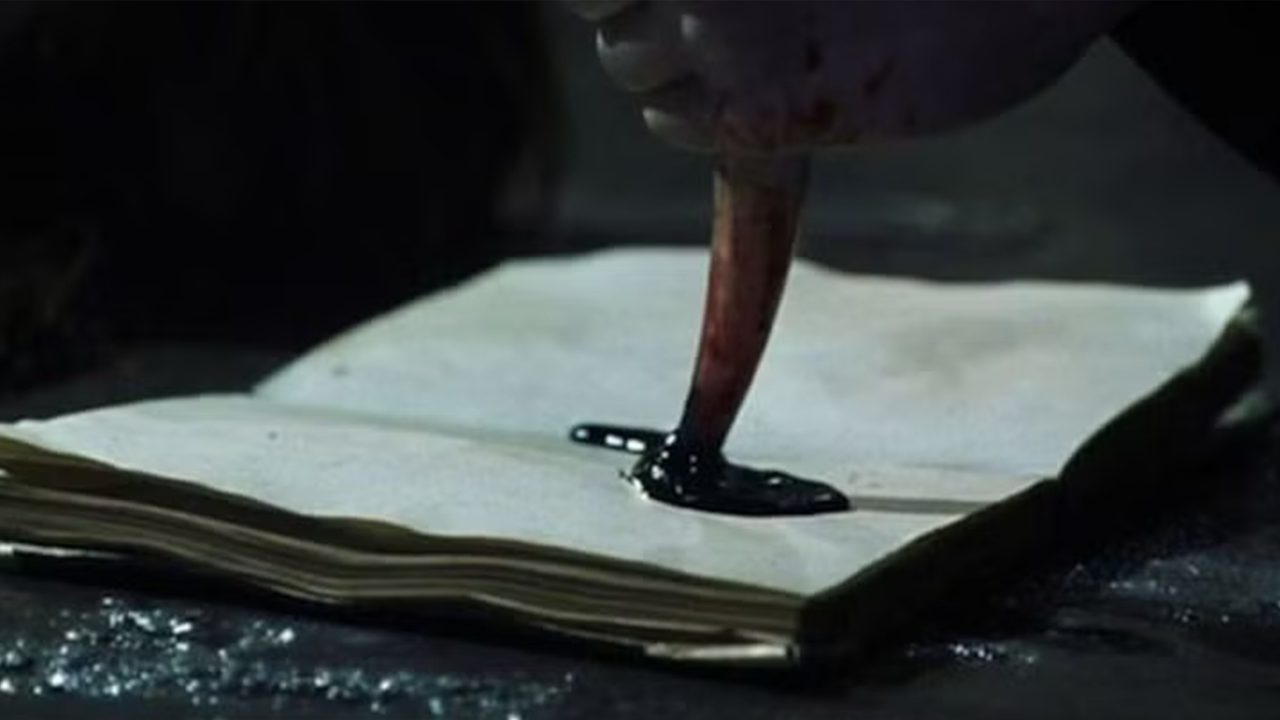
Voldemort’s pursuit of immortality fundamentally altered his existence, his appearance became increasingly inhuman, but his ambitions extended far beyond personal survival.
The Death Eaters and the First Wizarding War
By the 1970s, Voldemort had gathered a network of followers known as Death Eaters.
Many were attracted by his promises of pure-blood supremacy, while others sought influence, feared his power, or shared his appetite for cruelty. Through murder, torture, intimidation, and the use of the Imperius Curse, Voldemort’s followers created an atmosphere of fear throughout wizarding Britain.
The Dark Mark, a skull with a serpent emerging from its mouth, became the terrifying symbol of their allegiance. The Ministry of Magic struggled to contain the violence, while the original Order of the Phoenix, founded by Dumbledore, organized resistance.
Voldemort’s first reign ended abruptly on October 31, 1981, when his attempt to kill the infant Harry Potter caused his Killing Curse to rebound.
His body was destroyed, but his Horcruxes prevented his complete death.
It would take another 17 years, the destruction of those Horcruxes, and a second wizarding war before Voldemort was finally defeated.
Severus Snape: Understanding the Dark Arts Without Surrendering to Them
Few characters demonstrate the moral complexity surrounding Dark magic as clearly as Severus Snape.
During his years at Hogwarts, Snape displayed an extraordinary talent for spellwork and potion-making. His interest extended beyond established magical techniques to the creation of original spells. Among his inventions was Sectumsempra, a vicious curse capable of inflicting deep, potentially fatal wounds.
Snape recorded the spell in his old Potions textbook under the identity of the Half-Blood Prince.
Years later, Harry Potter discovered the book and used the unfamiliar curse against Draco Malfoy, nearly killing him. The incident showed us just how dangerous magical knowledge can become when separated from an understanding of its consequences.
Snape’s early fascination with the Dark Arts also brought him into the company of future Death Eaters. He eventually joined Voldemort’s followers, becoming involved in the movement he would later help bring down.
His decision to turn against Voldemort followed the threat to Lily Potter, whom he had loved since childhood. After Lily’s death, Snape continued working secretly against Voldemort, serving as a double agent while maintaining the Dark Lord’s trust.
His story complicates any attempt to divide magical society neatly into those who have practiced Dark magic and those who have not.
Snape created a dangerous curse and made choices that contributed to terrible suffering. Yet his knowledge of the Dark Arts also made him uniquely capable of recognizing and countering certain threats.
Hogwarts and the Teaching of Defense Against the Dark Arts
For centuries, Hogwarts has attempted to prepare young witches and wizards for encounters with dangerous magic through Defense Against the Dark Arts. Students learn to recognize threatening creatures, counter hostile spells, and protect themselves from magical attacks.
But the school’s relationship with the subject has been… troubled.
After Dumbledore refused to appoint Voldemort to the teaching position, the job became subject to a curse that prevented professors from remaining in the role for more than a year. During Harry Potter’s education, this revolving door of teachers exposed students to dramatically different understandings of magical defense.
Remus Lupin emphasized practical instruction, teaching students how to confront Boggarts, Dementors, and other threats. Dolores Umbridge, by contrast, attempted to remove meaningful defensive magic from the curriculum, leaving students dangerously unprepared. Her interference helped inspire the formation of Dumbledore’s Army, through which Harry and his classmates secretly practiced defensive spells.
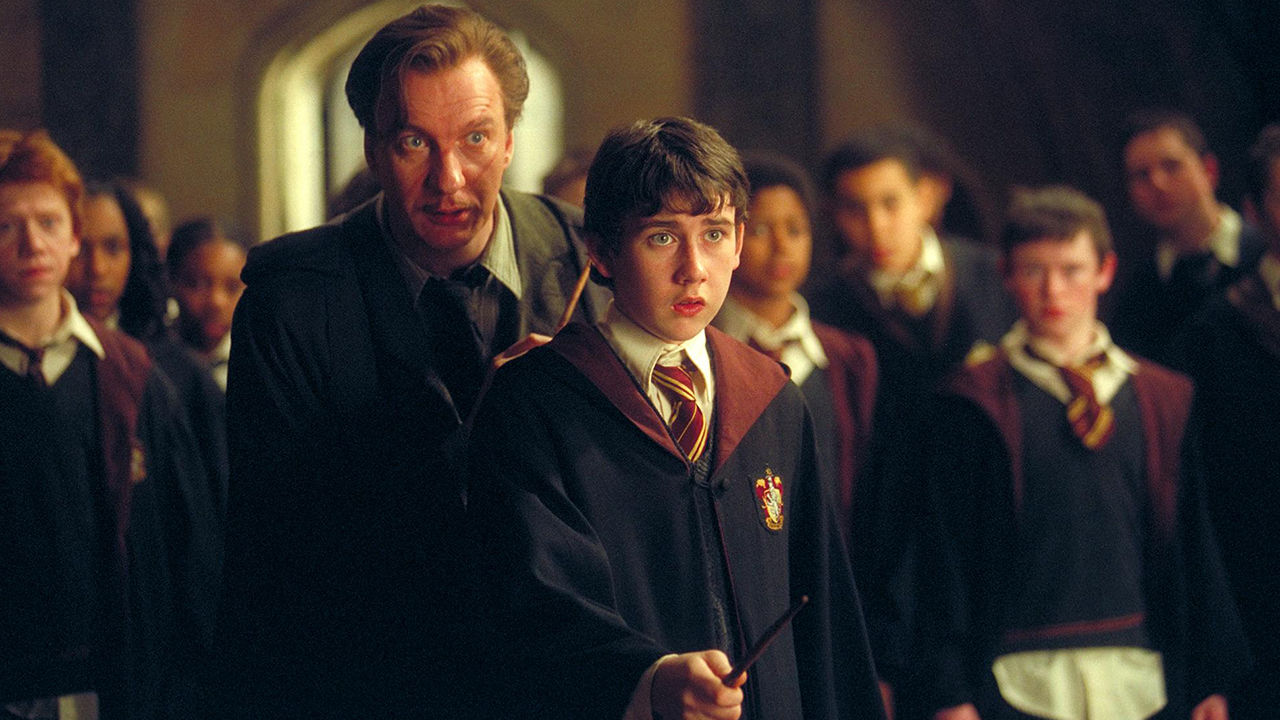
The situation became much darker during Voldemort’s control of Hogwarts in the 1997–98 school year. Under Amycus Carrow, the subject was transformed from Defense Against the Dark Arts into Dark Arts. Horrifically, students were expected to practice curses, including the Cruciatus Curse, against their classmates.
The Second Wizarding War and the Fall of Voldemort
Voldemort’s return to physical form in 1995 began a new period of escalating violence.
For a time, the Ministry of Magic refused to acknowledge his return, allowing Voldemort and his followers to rebuild their strength while the public remained dangerously uninformed.
Following the Ministry’s eventual acknowledgment, the conflict expanded. Death Eaters infiltrated institutions, targeted opponents, and increasingly used magic to terrorize both magical and non-magical communities. And after Dumbledore’s death in 1997, Voldemort’s followers gained control of the Ministry itself.
Muggle-born witches and wizards faced persecution, while Hogwarts was brought under the authority of Severus Snape and the Carrows.
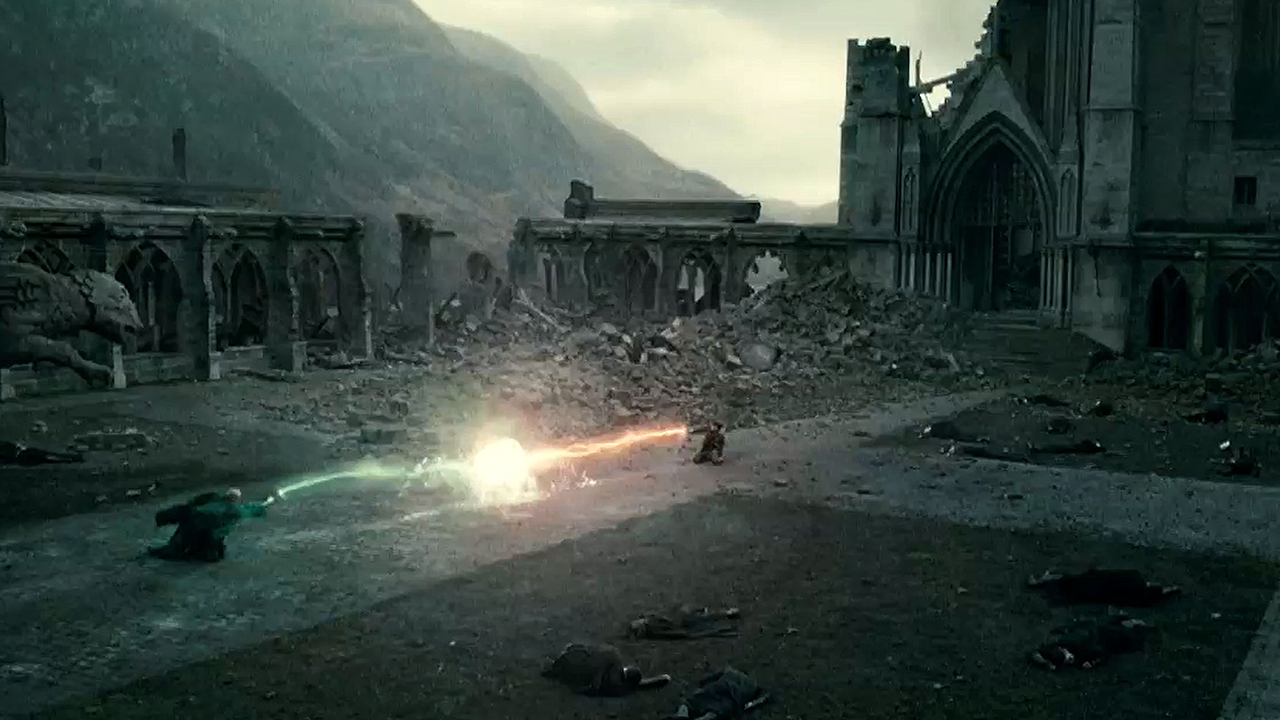
The final confrontation came during the Battle of Hogwarts on May 2, 1998.
By that point, Harry, Ron, and Hermione had spent months locating and destroying Voldemort’s Horcruxes, removing the protections that had allowed him to survive his first downfall. During the battle, Neville Longbottom killed Nagini, destroying the final surviving Horcrux after the soul fragment within Harry had already been eliminated.
Voldemort subsequently attempted to kill Harry using the Elder Wand, unaware that its allegiance belonged to Harry rather than himself.
His Killing Curse rebounded, ending his life and bringing the Second Wizarding War to a close.
Can the Dark Arts Ever Be Eradicated?
The defeat of Voldemort brought an end to his particular reign of terror, but it did not mean that Dark magic ceased to exist. The history of the wizarding world suggests that the Dark Arts are not a single organized tradition with one leader or philosophy.
They encompass centuries of magical discoveries, dangerous experiments, inherited beliefs, and individual decisions.
Their practitioners have pursued many different objectives. Herpo the Foul sought extraordinary magical achievements. Grindelwald wanted political domination. Voldemort desired absolute power and immortality.
Others became involved through fear, ambition, loyalty, or the influence of their families.
Forbidden knowledge can be rediscovered. Cursed objects can outlive their creators. Prejudices can pass between generations, and the desire for power can survive even the collapse of the movements built around it. At the same time, the wizarding world’s history offers examples of people choosing a different path.
Draco Malfoy eventually moved away from some of the beliefs he inherited, raising his son Scorpius to treat Muggles as equals. Severus Snape turned against the Dark wizard he once served. Regulus Black rejected Voldemort after discovering the terrible nature of his master’s pursuit of immortality.
And Harry Potter, despite possessing an extraordinary connection to Voldemort, repeatedly rejected the temptation to use power as a means of controlling others.
The Dark Arts cannot simply be defeated once and forgotten. They must be understood, challenged, and resisted by each new generation.
Subscribe to MuggleNet Dispatch
The biggest Wizarding World news and more, straight to your inbox.
About MuggleNet: MuggleNet has covered the Wizarding World since 1999, offering news, guides, editorials and fan resources for readers around the world.