

- By MuggleNet Editorial Staff
- 24 Aug, 2026
Hogwarts Classes, Textbooks, and Schedules: A Student’s Guide to Academics
Your robes are packed, your books are bought, and somewhere in the castle a professor is already preparing the homework you forgot you would have to do. Before term begins, here is what every new Hogwarts student should know about classes, electives, textbooks, and what an ordinary week of magical education might actually look like.
How Hogwarts Classes Work by Year
Your academic life changes considerably between your first trip across the lake and your final year in the castle. Here is the broad version of what to expect.
Learn the Basics
First- and second-year students follow a largely fixed curriculum covering the essential branches of magical education. Flying is also required during the first year.
Choose Electives
Beginning in third year, students add elective subjects to their timetables while continuing their core courses. Fifth year culminates in the Ordinary Wizarding Level examinations, better known as O.W.L.s.
Specialize
After O.W.L.s, students generally continue only the subjects for which they have achieved the grades required by their professors, allowing their final years to focus more closely on future careers and N.E.W.T.-level study.
Core Hogwarts Classes
These subjects form the foundation of a Hogwarts education. Open each class for a quick look at what awaits you inside the classroom.
Astronomy Core
Astronomy at Hogwarts is much like its Muggle counterpart, with considerably better views from the Astronomy Tower. Students learn the names and positions of stars, observe the movement of planets, and complete detailed star charts.
Charms Core
Charms teaches students how to give objects new or altered properties through spellwork. Lessons range from levitating objects to Summoning Charms and form one of the most practical foundations of everyday magic.
Defense Against the Dark Arts Core
Defense Against the Dark Arts prepares witches and wizards to recognize and protect themselves from dangerous creatures, curses, Dark magic, and other magical threats. Defensive spellwork becomes increasingly advanced as students progress through Hogwarts.
The subject has also experienced one of the more notorious staff turnover rates in the castle, meaning the curriculum can vary depending on who happens to be standing at the front of the classroom that year.
Flying First Year
Flying lessons are required for first-year students. Beginners learn to summon their broomsticks, mount properly, take off, steer, and, ideally, return to the ground without requiring a visit to the hospital wing.
Herbology Core
Herbology is essentially magical botany. Students learn how to identify, grow, care for, harvest, and use plants and fungi with magical properties. Gloves are strongly recommended, particularly when the plant in question can bite back.
History of Magic Core
History of Magic examines major events in the history of the magical community. Known topics include goblin rebellions, giant wars, and the International Warlock Conventions of 1289 and 1709.
The subject is famously taught by Professor Cuthbert Binns, which makes it the only Hogwarts class in which the professor being dead is considered entirely routine.
Potions Core
Potions teaches the precise brewing of magical draughts using combinations of magical and mundane ingredients. Preparation, timing, temperature, and exact measurements matter, improvisation is generally discouraged unless you enjoy scraping melted cauldrons off dungeon floors.
Transfiguration Core
Transfiguration deals with magically changing the form or appearance of objects and living things. It is regarded as one of Hogwarts’ more complicated and potentially dangerous disciplines and requires considerable precision.
Third-Year Electives and Advanced Courses
Once you reach third year, Hogwarts finally allows you some say over your timetable. Students choose at least two electives, although particularly ambitious witches and wizards may attempt more.
Ancient Runes Elective
Ancient Runes studies historical forms of magical writing. Coursework includes interpreting and translating runic inscriptions into modern English.
Arithmancy Elective
Arithmancy examines the magical properties and significance of numbers. It is generally considered one of Hogwarts’ more academically demanding electives.
Care of Magical Creatures Elective
Care of Magical Creatures is the wizarding equivalent of zoology or animal science. Students study the behavior, care, handling, and characteristics of magical creatures, some friendlier than others.
Divination Elective
Divination explores methods of attempting to predict the future. Lessons may involve crystal balls, tea leaves, dreams, visions, palmistry, and other forms of magical fortune-telling.
Muggle Studies Elective
Muggle Studies examines the history, culture, technology, and everyday lives of non-magical people. For students raised entirely within the wizarding world, the course offers an introduction to a society that operates without magic.
During the 1997–1998 school year, Muggle Studies was made compulsory under Death Eater control of Hogwarts and transformed into propaganda under Alecto Carrow.
Alchemy Advanced
Alchemy may be offered to sixth-year students when there is sufficient demand. The discipline involves the magical study and manipulation of substances and the traditional elements of air, earth, fire, and water, including attempts to transform one substance into another.
Apparition Age 17
Eligible older students can take a 12-week Apparition course teaching them how to disappear from one place and reappear in another. The course costs 12 Galleons and is open to students who are 17 or who will turn 17 by the end of August.
Passing the course does not itself replace the official Apparition test, so don’t start planning unauthorized weekend trips just yet.
What Happens After Fifth Year?
What Will Be on Your Hogwarts Reading List?
Before each school year, Hogwarts students receive a list of required books along with the rest of their school supplies. Professors select texts according to their plans for the coming term, which means the list can change considerably from one year to the next.
Most students purchase their books at Flourish and Blotts in Diagon Alley, where the shelves are stocked ahead of the annual back-to-school rush.
Defense Against the Dark Arts is particularly unpredictable. When Gilderoy Lockhart became professor in 1992, for example, he assigned his own published works to his students. The following year brought an entirely different problem when Rubeus Hagrid required The Monster Book of Monsters, copies of which had the unfortunate habit of attacking one another.
Some books, however, remain staples of a Hogwarts education. Miranda Goshawk’s Standard Book of Spells series includes volumes corresponding to the various grade levels, while Bathilda Bagshot’s A History of Magic is used throughout students’ years at the school.
What Does a Hogwarts Class Schedule Look Like?
Hogwarts never provides readers with a complete bell-by-bell timetable, but the books give us enough clues to reconstruct portions of Harry Potter’s schedule. The example below shows what his fourth-year week in 1994–1995 may have looked like based on the classes specifically documented in the story.
| Time | Monday | Tuesday | Wednesday | Thursday | Friday |
|---|---|---|---|---|---|
| Morning | Herbology with Hufflepuff | History of Magic | Undocumented | Transfiguration | History of Magic |
| Break | Break | Break | Break | Break | Break |
| Late Morning | Care of Magical Creatures with Slytherin | Undocumented | Charms | Undocumented | Charms |
| Midday | Lunch | Lunch | Lunch | Lunch | Lunch |
| Afternoon I | Divination | Potions | Undocumented | Defense Against the Dark Arts | Potions with Slytherin |
| Afternoon II | Divination | Undocumented | Undocumented | Defense Against the Dark Arts | Potions with Slytherin |
| Evening | Dinner | Dinner | Dinner | Dinner | Dinner |
* Undocumented periods: The gray-patterned cells represent portions of Harry’s fourth-year timetable that are not clearly established in the books.
Astronomy is also not specifically placed within Harry’s fourth-year daytime schedule. Since Astronomy lessons are held at night, the class may have taken place after dinner on one of the otherwise undocumented evenings.
** Shared classes: Students from two Houses sometimes take a subject together, although many lessons appear to contain students from only one House.
Before You Head to Class…
Hogwarts may offer moving staircases, enchanted ceilings, ghosts in the corridors, and the occasional lesson involving something with teeth, but it is still a school. Expect essays, examinations, practical work, assigned reading, and plenty of homework waiting back in your common room.
About MuggleNet: MuggleNet has covered the Wizarding World since 1999, offering news, guides, editorials and fan resources for readers around the world.
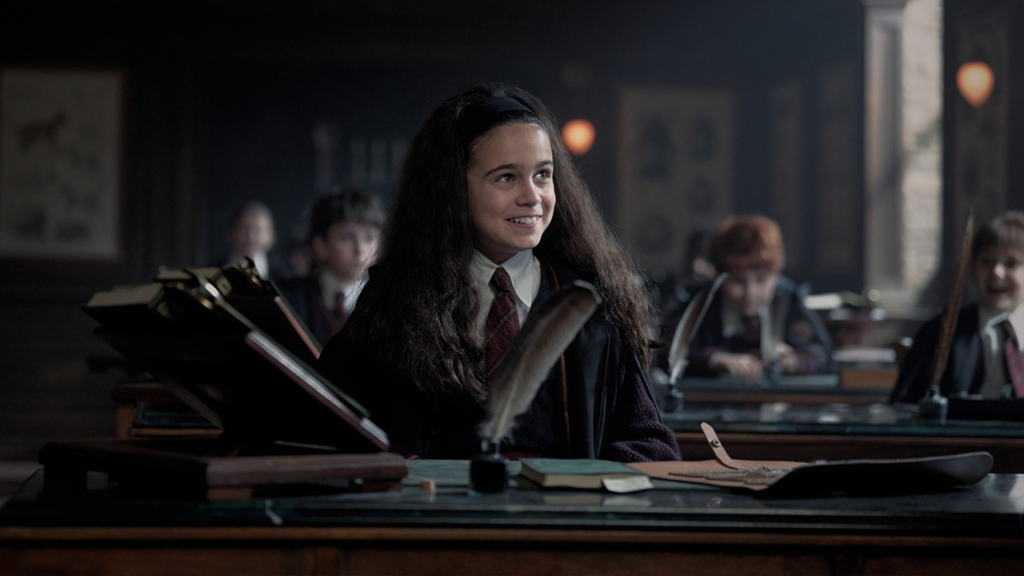
Feature image: Warner Brothers Discovery