

- By MuggleNet Editorial Staff
- 6 May, 2026
- Books
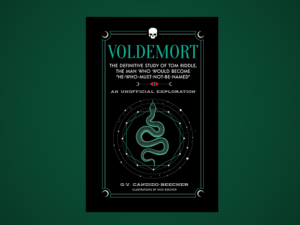
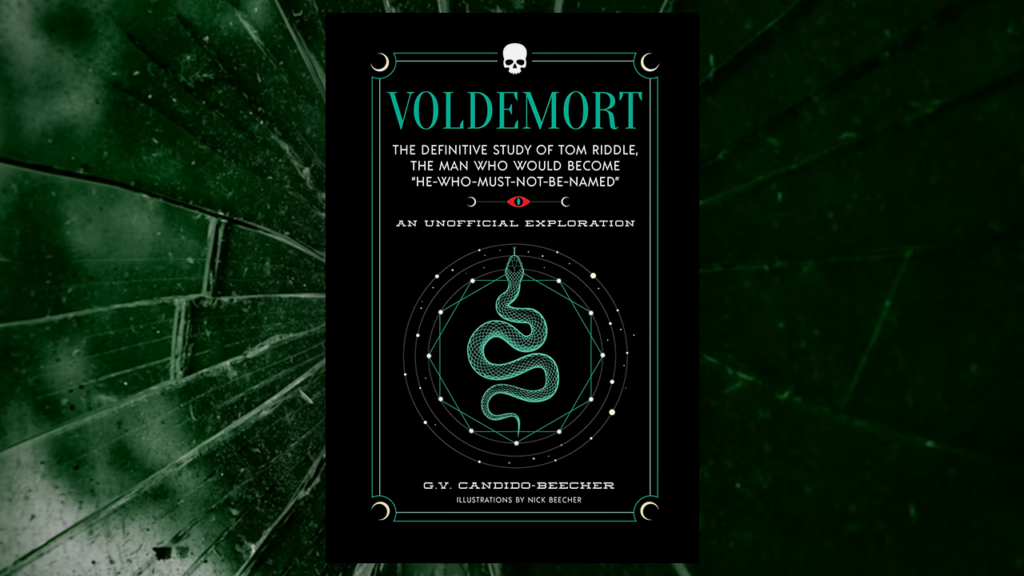
In Voldemort: An Unofficial Exploration, Grace Candido-Beecher traces the arc of Tom Riddle’s transformation, examining the orphanage, the diary, the Horcruxes, and the moral questions around the Dark Lord. The result is a careful reckoning with one of contemporary fiction’s most studied antagonists, written for the readers who grew up alongside him and now want to understand what they were really reading.
We sat down with Candido-Beecher to discuss the research behind the book and why, decades after the final novel’s publication, Voldemort still has so much to teach us about fear, power, and the stories we tell ourselves.
What portion of Tom Riddle/Voldemort’s life is most interesting to you?
ALL OF IT.
It would be impossible to pick just one phase of Tom’s story to be focused on. I’m compelled by the mystery of Tom. His history, his genealogy, his mentality, his relationships, his actions, I’m obsessed with all of it.
Do you see Tom Riddle as purely evil?
No, he’s human. I think it’s pretty plain to see his obvious shortcomings.
Tom as a character is made up of both positive aspects and negative ones. He’s incredibly intelligent, resilient, resourceful, and ambitious (yes, I’ll stand by this as a POSITIVE trait). Yet, he’s born into the world so achingly alone, unable to connect with the people around him due to no fault of his own. He’s born into horrible neglect, abuse, and war, without anyone to guide him through this unforgiving life.
Does this mean that all is forgiven and forgotten because he had a rough childhood and doesn’t have a basic understanding of empathy? UH NO, that’s a jump buddy, calm down. But in that same breath, this lived reality means that we can’t completely disregard his past. He sees the world in a cold, unforgiving way because he has never known a world that was anything but cold and unforgiving. In the ethereal King’s Cross platform, Dumbledore points out that Tom could never appreciate fairy tales, and while this is a fair assessment, it’s also reductive. Fairy tales are meant to be comforting experiences (and sometimes warnings) shared between a child and a guardian. To level that sort of accusation at someone who has never had a guardian is, simply put, pretty cruel.
If we’re going to fault Tom, it shouldn’t be because of his lack of understanding when it comes to love and empathy, it should be because of his conduct. They’re linked in this case, but not always. Plenty of people who have an underdeveloped sense of empathy (namely people who have ASPD, or in layman’s terms, classify as psychopaths and sociopaths) go on to live fulfilling lives without causing catastrophic damage.
In different circumstances, Tom might have found his way to leading a fulfilling life on his own terms. Maybe those terms would have looked different than what Albus or Harry think contentment looks like, but it would have been contentment nonetheless.
My impression is that the core character of Tom isn’t purely evil. He had the makings of an incredible Minister for Magic, or professor, or a headmaster had things shaken out just a bit differently. But there were so many factors around him, violent, vitriolic, and ready to convince him that life is war and only the most powerful survive.
And when life is a constant battleground, he only sees a single escape: immortality and domination.
What do people most often misunderstand about the character?
I will forever be mystified by the reading of Tom that he’s very suave. Mind you, I love him because he’s multifaceted and can be read in many different ways, but I see sections of text where Tom “smiles mechanically” and explains how “I am ordered here because of [the artifacts]. I am only a poor assistant, madam, who must do as he is told.” (HBP435) and I think to myself “do people really think this is swagger?”
The way I read him, he’s solely focused on obtaining people’s friendship so he can worm his way into their psyche and use them for his own goals. No…not those goals, get your mind out of the gutter, I’m talking about POWER. Real power, not *powerplay*.
Tom befriends Ginny, he befriends the gray lady, he wears this polite, meek schoolboy persona to perfection to charm his professors. I find that if we’re solely assessing the text, he’s much less forward, alluring, and romantically dominating than what fandom would imply. That being said, I think it’s safe to say that some of his attempts at friendship might have been misconstrued because of his dazzling good looks. (Hitting the scene with a smile that could win a Witch Weekly award.)
ALSO, I’ve found that there’s this tendency for people to think that Tom is either an absolute mastermind who has never made a mistake in his insidious plans, or he’s an absolute idiot who can’t kill a baby. I believe the truth is that he’s a very intelligent man who lacks the wisdom and insight necessary to make decisions that truly benefit him. He’s a wounded man, wounding others with insidious disregard.
 New
New
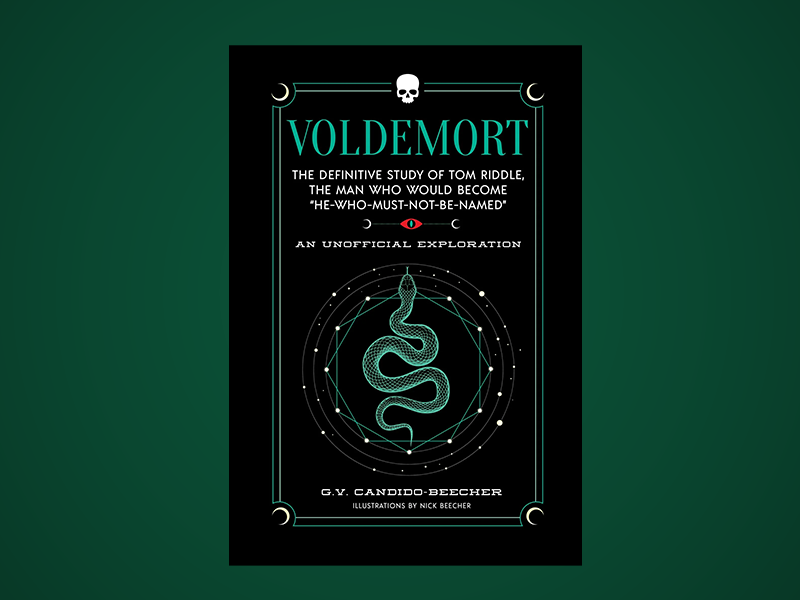
Voldemort – An Unofficial Exploration
Was there a turning point where Tom could have turned back and redeemed himself?
When I originally wrote this book, I theorized that Tom could have been ‘saved’ if something or someone had intervened in his life somewhere between the ages of 11-14. When I spoke with my good friend Lorrie Kim (writer of the Snape book), she asked me a pointed question.
When is someone too far gone to be saved?
I understand and there’s no clear cut answer (and certainly no judgement for anyone who disagrees with me). It was at that moment that I realized that I must be an idiotic optimist, an absolute fool of an idealist. In my mind, he’s redeemable at any point where he might choose to self-reflect and come to terms with his decisions and the destruction it’s caused. He could save himself at any time, but it would mean letting go of his need for power and control as a salve for his emotional wounds, and realizing the pain and loss he’s caused in his attempt to evade death. Harry clearly thinks he can be saved, even at the end. In his own halting way, Harry offers Tom the advice that he believes will help, “Try…try for some remorse….” (DH741)
That being said, I’ll stand by my initial assessment that it would have been easiest to persuade Tom to walk another path in his youth, before the horcruxes. Children who show early signs of problematic behavior have more hopeful results when empathetic actions are rewarded, so they can logically connect the benefit of helping the people around them with good feelings.
How is Voldemort different from a villain like Grindelwald?
We get surprisingly little information about Grindelwald. There’s a section of the Voldemort book that talks all about the dynamic between them during their conversation in DH, but I’ll do my best to sum up my personal thoughts here. (The Fantastic Beasts movies expand on this narrative a great deal, but I’m a books-only HP scholar, so we’ll see what we can surmise from the mentions.)
From how Albus speaks of his time with Gellert in the final few chapters of DH, it seems as though Gellert was a different sort of dark lord. Albus speaks of how their ideas caught his imagination. “You cannot imagine how his ideas caught me, Harry, inflamed me…Did I know, in my heart of hearts, what Gellert Grindelwald was? I think I did, but I closed my eyes.” Though it’s impossible to say for sure, I think, from this passage we can extrapolate that Gellert genuinely believed his ideals would bring about a better world, but he had a hunger to control that world.
For Tom, however, a better world is not really a part of the equation. Yes, he has pureblood ideals, but I theorize in the Voldemort book that this fixation on blood-purity is rooted both in genuine dismay for his father’s abandonment, but also in convenience. The pureblooded families around him have already adopted this goal, and so if he successfully champions this goal, he becomes their savior. Tom doesn’t seek a better world, he seeks more power. In this way, I think one might classify Tom’s goals as being more selfish than Grindelwald’s (Though I think it’s pretty clear from Albus’ distaste that in the later years, Gellert may have been overly enchanted by the allure of power as well. But hey, at least he had the wisdom to see the error of his ways before meeting his end…)
What is Tom/Voldemort’s real opinion of Harry Potter?
Oh Lordy. How much time do we have?
Without blowing out the word count of this answer, I’ll try to sum things up as best as I can. In the Voldemort book, I put forth the theory that Tom is fixated on Harry for several reasons, each branching deeper into his psyche as we peel them back. I’ll go through a few of them and leave the rest for you to discover later.
On the surface level, he considers Harry to be an extension of Dumbledore. We clearly see this through his labeling Harry as “Dumbledore’s puppet” or reducing his title to “the boy”, meaning he is not even worthy of his consideration, not even worthy of having a name. But, if we extend the assessment of Dumbledore as someone who Tom considered to be a figure worthy of esteem, who had attained power comparable (and perhaps even surpassing) Tom’s own. This would make him something of a father to Tom, and this father had rejected him just as Tom’s birth father had. Dumbledore even took a step further and embraced a new son, a better son. A son blessed with the knowledge of love. Within this fertile soil, the first seed of jealousy begins to grow.
Beneath that rage, there’s something far deeper about Harry’s character that gnaws at Tom’s sanity. Harry is so remarkably loved, so desperately wanted. From the moment of his birth, Tom sees himself as rejected. He sees any tie to another human something to be controlled and manipulated carefully. Nothing in his life has stood up against this lived experience, until Harry. Harry’s parents died rather than abandon him, whereas Tom’s father rejected him. Harry’s friends willingly stay by his side, whereas Tom’s “chosen family” abandons him the moment he shows weakness. Harry stands as a living testament against everything in Tom’s lived experience and ideology. He’s vexed by it, jealous of it, obsessed with it, overwhelmed by it year after year. He’s so wildly envious of this love because it’s the one thing for certain that would have filled the void he constantly tries to substitute with power and control.
Tom imposed his trauma on Harry. He killed his parents, leaving him alone in what he saw as a cold and unforgiving world, yet Harry was equipped with that first year of love from his parents that protected him from letting that trauma define him.
It’s clear they feel strongly for one another (whether it be hate, pity, rage, or otherwise). Harry is the other side of the coin, a symbol of hope, a light in the darkness.
Are there any popular headcanons in the fandom that you like?
I honestly don’t know many headcanons from the fandom about Tom. There are more of them when it comes to the Marauders and Snape. However, I do have a few of my own fun little headcanons and a few I’ve stumbled across online! Enjoy!
- Tom enjoys music – it’s a way to connect with the human experience that his lack of empathy has really cut him off from. He’s able to feel a hint or an approximation of the emotions he doesn’t get to exercise.
- Tom enjoys movies – When he was young he used to sneak into the nearby cinemas to catch glimpses of movies, hiding away when he feared he would be caught by the attendants. They brought a spark of color and magic to his very bleak life.
- When he began to focus more of his efforts on gaining power, I think he gave up on his love for music and movies, considering them childish fascinations and distractions from his true goal. I wonder if he missed them from time to time.
- Death Eaters who were rather close to him (like Bellatrix, Rodolphus, and possibly Severus) may have even known about this.
- Tom has a weak stomach – The idea occurred to me when I realized we never really see Tom eat or drink anything throughout the series. (We only see him hold a glass of wine in the LV request chapter.)
- Tom’s murder of the Riddle family was devastating to him – When asked he’d later describe this night as an overwhelming victory, but I believe his hopes and dreams about his father were shattered in a single night and it left him utterly devastated.
- Poor circulation – This one feels random, I know, but I’ve noticed that in many fandom-centric works, Tom has cold hands. I agree that it somehow makes sense though I literally have 0 justification for it. Lol
- Possessive attitude – Tom is a thief at heart, an individual who only needs the best possessions and needs to hold them close at all times. I theorized that Tom is asexual, but that doesn’t mean he can’t be romantically involved with someone! If there ever was any romance with him, I think he’d be possessive to an unhealthy extent.
- Very thrifty – Tom used to embellish his own wardrobe with magic because he didn’t have the money to buy what he needed to appear “upper class”.
- DRAMATIC – I think this one is borderline canon. (Look at his rebirth scene, for God’s sake. The only thing it lacked was black glitter.) He adores hearing gossip and justifies it as “collecting information” and then loves to reveal it at the most dramatic moment.
- He was not popular at school immediately – I think there was a learning period where Tom was most likely an outsider to the other students before he gathered his loyal crew and started to run the school.
- He has a horrible sleep schedule and suffers from night terrors.
- He used to keep sleep hours different from the boys in his dorm because he feared they would try to hurt him in his sleep. He trusts no one.
- He has frequent nightmares of bombs and air raid sirens and casualties.
- I think his lack of sleep makes his paranoia even worse.
How do you hope the TV show portrayal will represent Tom/Voldemort compared to the movies?
I preface this by saying that I think the TV show is going to do a great job and the movies also did a great job. Gold stars all around.
I personally would have loved to see the series animated, top to bottom, front to back. I’m an animation purist. In my opinion, everything would be better if it were animated. It’s an exquisite art form which should garner more respect and love.
That being said, I will be really impressed if they lean into the horror aspect of Tom. My fixation with Tom as a kid was an introduction into a long lasting love and appreciation of the horror genre. Make him a terrifying entity, a truly unpredictable force of nature who becomes grounded in reality the more Harry gets to know his antagonist. Lean into his monstrous visage so that when he’s introduced as a human later, the comparison is uncanny and jarring. Make him utterly terrifying and snake-like. I’d love to see as much of his backstory as possible! More interactions with the Death Eaters!
And most of all, PLEASE, PLEASE, PLEASE make his eyes red this time?
Pretty please?
Voldemort: An Unofficial Exploration is available now at your preferred retailer.
Editor’s note: “Voldemort: An Unofficial Exploration” is published by Media Lab Books, a division of Topix Media Lab, which also owns MuggleNet. This interview was conducted independently, without editorial input or review from the publisher.