

- By MuggleNet Editorial Staff
- 23 Apr, 2026
Want to learn more about the Dark Arts? Uncover centuries of forbidden magic, powerful curses, and notorious Dark wizards in MuggleNet’s complete history of the Dark Arts , from ancient magical practices to the rise and fall of Lord Voldemort.
Horcruxes are one of the darkest bits of magic in the Harry Potter series. They are the reason Voldemort could keep coming back, the reason Harry, Ron, and Hermione had to spend so much of Deathly Hallows on the road, and one of the reasons the final battle was such an emotional climax to the journey.
A Horcrux is created when a witch or wizard murders someone and uses that act to tear their soul apart, then seals a fragment of that soul inside an object or living being. We never discover the actual process required, though. Voldemort, in his arrogance, he split his soul again and again, hiding pieces of himself in objects he believed were meaningful or symbolically grand. Naturally, this also says a lot about him. Voldemort wanted immortality but he was going to be dramatic about it.
Tom Riddle’s diary
The diary was the first Horcrux we ever encountered, though we did not know it at the time. Introduced in Harry Potter and the Chamber of Secrets, it appeared to be a simple blank notebook. In reality, it contained a preserved version of sixteen-year-old Tom Riddle, capable of thinking, manipulating, and eventually draining life from Ginny Weasley to restore himself.
Voldemort likely chose the diary because it preserved the version of himself he admired most: clever and charming. It was also tied directly to his first major triumph at Hogwarts, the opening of the Chamber of Secrets and the framing of Hagrid.
The diary was destroyed by Harry with a basilisk fang in the Chamber. Basilisk venom is one of the only substances powerful enough to destroy a Horcrux completely beyond magical repair. Fittingly, one of Voldemort’s earliest trophies was undone by one of Slytherin’s own monsters.Take that, Tom.
Marvolo Gaunt’s ring
The ring originally belonged to Voldemort’s maternal grandfather, Marvolo Gaunt, making it a treasured link to the pure-blood ancestry Voldemort romanticized despite despising almost everyone actually connected to it. It also contained the Resurrection Stone, though Voldemort either did not know or did not care much about that particular aspect of it.
He turned the ring into a Horcrux after murdering his father, Tom Riddle Sr., and likely chose it because it represented his connection to Salazar Slytherin through his mother’s line. To Voldemort, that mattered far more than the Muggle side of his heritage, which he loathed.
Dumbledore destroyed the ring with the Sword of Gryffindor. Before doing so, though, he put it on and suffered a terrible curse that helped lead to his death.
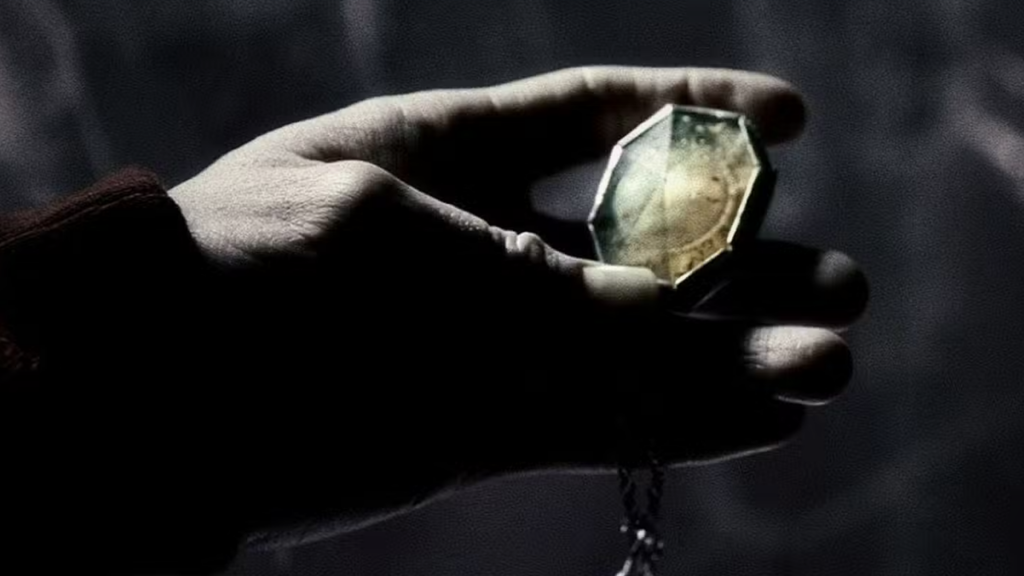
Salazar Slytherin’s locket
The locket was one of the founder relics Voldemort prized most. It once belonged to Salazar Slytherin himself, then passed through Voldemort’s maternal family. This made it doubly appealing to him: historically important and personally symbolic.
Voldemort hid it in the seaside cave where he had once terrified fellow children from the orphanage, surrounding it with layers of magic, poison, and Inferi.
After a long chain of events involving Regulus Black, Kreacher, Dolores Umbridge, and the trio’s miserable camping trip, Ron destroyed the locket with the Sword of Gryffindor. The locket fought back hard, projecting visions tailored to his deepest insecurities before he stabbed it.
Helga Hufflepuff’s cup
Voldemort stole Hufflepuff’s cup from Hepzibah Smith, who had acquired it as a collector of magical treasures. He then murdered her and turned the cup into a Horcrux. Like the locket, the cup was one of the Hogwarts founder objects Voldemort coveted as proof of his own significance.
Why choose the cup? Because Voldemort was obsessed with Hogwarts and with the idea that he belonged among the school’s greatest legacy figures, even if he could never truly understand what made them great.
The cup was hidden in Bellatrix Lestrange’s vault at Gringotts, protected by one of the safest magical institutions in the world. Hermione destroyed it with a basilisk fang in the Chamber of Secrets after the break-in.
Rowena Ravenclaw’s diadem
The diadem once belonged to Rowena Ravenclaw and was stolen by her daughter, Helena Ravenclaw, before being hidden in Albania. Voldemort tracked it down during his travels and later turned it into a Horcrux. For someone obsessed with rare, powerful artifacts, this one would have been irresistible. The diadem was tied not only to another Hogwarts founder but also to intelligence and prestige, both things Voldemort believed he embodied better than anyone else.
He hid it in the Room of Requirement at Hogwarts, specifically in the room where generations of students had hidden contraband and secrets. He was convinced that he alone understood the magic around him. He never imagined that countless other people had discovered the room too.
The diadem was destroyed during the Battle of Hogwarts when Vincent Crabbe unleashed Fiendfyre in the Room of Requirement. Harry, Ron, and Hermione escaped; the Horcrux did not.
Harry Potter
Harry was never meant to be a Horcrux, which is what makes him the strangest and most important one. When Voldemort tried to kill baby Harry in Godric’s Hollow, the curse rebounded, Voldemort’s soul was already unstable from repeated splits, and a fragment broke off and attached itself to the only living thing in the room: Harry.
Voldemort did not choose Harry in the same way he chose the others, but in trying to destroy the person prophesied to defeat him, he unintentionally tethered himself to that very person. His need for control created the exact vulnerability that would one day undo him.
The Horcrux inside Harry was destroyed when Voldemort struck Harry with the Killing Curse in the Forbidden Forest. Because Harry willingly walked to what he believed was his death, and because Voldemort used Harry’s blood to rebuild his own body, the situation became more complicated than Voldemort understood. Harry survived, but the soul fragment inside him did not.
Nagini
Nagini was Voldemort’s final deliberate Horcrux and his only one made from a living creature on purpose. By the time he turned her into one, he was far less human in every sense, so the choice feels significant. Nagini was a weapon, a companion, and an extension of Voldemort’s own will.
He likely chose her because he trusted her proximity and usefulness. Unlike the founder relics, Nagini could move, strike, and stay close to him. Once most of the other Horcruxes were gone, he kept her under constant protection, which shows he finally understood he was running out of backups.
Neville Longbottom destroyed Nagini with the Sword of Gryffindor during the Battle of Hogwarts. It is one of the best moments in the series because Neville, who began as an overlooked and underestimated student, became the one to eliminate Voldemort’s last external piece of soul.
Why Voldemort chose these Horcruxes
Voldemort never picked random objects because Voldemort did not do random. He was arrogant, sentimental in a very twisted way, and obsessed with legacy. He wanted objects that reflected his idea of greatness: artifacts tied to Hogwarts, relics connected to powerful bloodlines, symbols that made him feel exceptional.
That is also part of why he failed. He believed meaning made things stronger, but meaning also made them traceable. Dumbledore and Harry were able to understand his choices because they understood him. Voldemort inadvertently left a trail of clues.
The full list of Horcruxes and how they were destroyed
For a quick recap, Voldemort’s Horcruxes were:
- Tom Riddle’s diary: destroyed by Harry with a basilisk fang
- Marvolo Gaunt’s ring: destroyed by Dumbledore with the Sword of Gryffindor
- Salazar Slytherin’s locket: destroyed by Ron with the Sword of Gryffindor
- Helga Hufflepuff’s cup: destroyed by Hermione with a basilisk fang
- Rowena Ravenclaw’s diadem: destroyed by Fiendfyre in the Room of Requirement
- Harry Potter: destroyed by Voldemort’s own Killing Curse in the Forbidden Forest
- Nagini: destroyed by Neville with the Sword of Gryffindor
In the end, the Horcruxes reveal Voldemort’s fear of death, his obsession with symbols, and his certainty that he was always the cleverest person in the room. He built his immortality with vanity.
About MuggleNet: MuggleNet has covered the Wizarding World since 1999, offering news, guides, editorials and fan resources for readers around the world.
Last Updated: May 30, 2026