

- By MuggleNet Editorial Staff
- 24 Aug, 2026
The History of Hogwarts: From the Four Founders to the Battle of Hogwarts
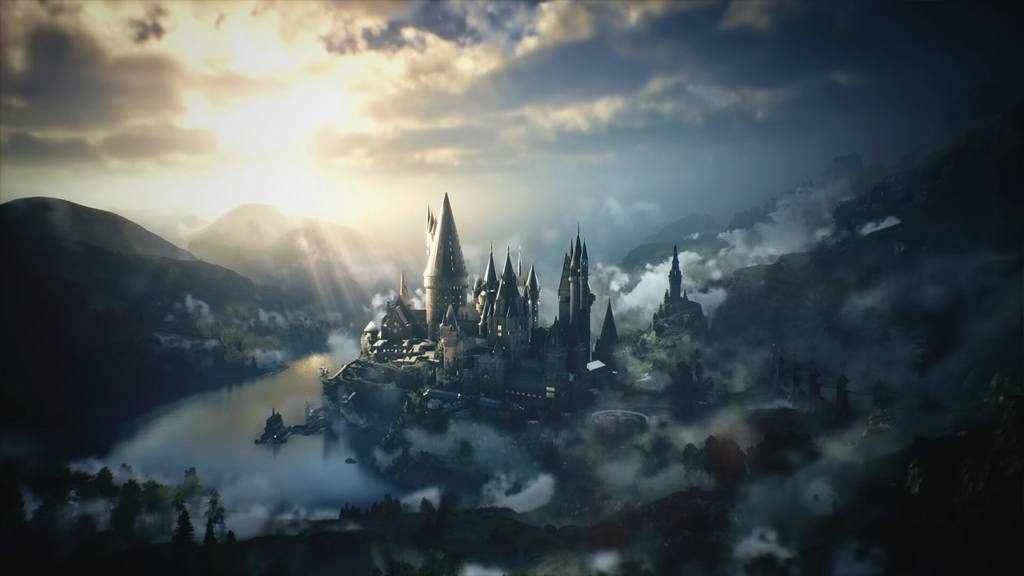
By the time you cross the lake for your first night at Hogwarts, the castle has already been standing for more than a thousand years. Its corridors have survived feuds, hidden monsters, generations of headteachers, visiting schools, Dark wizards, wars, and rather more rule-breaking than anyone has managed to record. Before you add your own chapter, here is the story of the school that came before you.
How Hogwarts Began
Long before the Hogwarts Express, changing staircases, House Cups, or even Professor Binns’s lectures about ancient history, four exceptionally talented magical people decided Britain needed a school devoted to teaching young witches and wizards.
Hogwarts School of Witchcraft and Wizardry was founded sometime in the tenth century by Godric Gryffindor, Helga Hufflepuff, Rowena Ravenclaw, and Salazar Slytherin. The four were friends as well as accomplished witches and wizards, united by the idea of creating a great school of magic.
They built their school in the Scottish Highlands, far from Muggle settlements. The period was not always a safe one for magical people, and Hogwarts was protected by enchantments intended to keep curious Muggles away. Those protections became part of a long tradition of secrecy surrounding the castle.
Even the school’s name has attracted a legend of its own. One popular wizarding theory claims that Rowena Ravenclaw dreamed of a warty hog that led her to a cliff beside a lake, inspiring both the location and the name “Hogwarts.” Charming as the story is, it has never been established as historical fact.
Meet the Four Founders
The founders shared a school, but they did not share exactly the same ideas about education. Each valued different qualities in students, and those preferences became the basis of the four Hogwarts Houses.
Godric Gryffindor
Godric valued courage, nerve, and boldness and was renowned as an exceptional duellist. He supported the admission of Muggle-born students, a position that would eventually place him in direct conflict with Salazar Slytherin. Gryffindor also left Hogwarts two especially important objects, his goblin-made sword and the hat that would become the Sorting Hat.
Helga Hufflepuff
Helga valued loyalty, fairness, and hard work, but her most important educational principle may have been her willingness to teach students without excluding them according to ancestry or exceptional talent. She was skilled at Charms and magical cookery, and traditions associated with her recipes survived in the Hogwarts kitchens for centuries.
Rowena Ravenclaw
Rowena prized intelligence, learning, creativity, and wit. Her enchanted diadem was said to increase the wisdom of its wearer. Her personal history ended tragically after her daughter, Helena, stole the diadem and fled. Helena’s story would ultimately become part of Hogwarts history too. She returned to the castle as the Grey Lady, Ravenclaw’s House ghost.
Salazar Slytherin
Salazar valued ambition, resourcefulness, and cunning, but he also believed Hogwarts should admit only students from magical families. The other founders rejected that position. His dispute with Gryffindor became particularly bitter and eventually resulted in Slytherin leaving the school, but not before he concealed one of Hogwarts’ most dangerous secrets beneath the castle.
The Feud That Changed Hogwarts
The four founders worked together successfully for years, but their disagreement over which students deserved a magical education eventually became impossible to ignore.
Salazar Slytherin Leaves the School
Slytherin distrusted Muggle-born witches and wizards and wanted Hogwarts to restrict admission to children from magical families. Gryffindor, Ravenclaw, and Hufflepuff opposed him. The disagreement, especially the conflict between Slytherin and his former friend Godric Gryffindor, ended with Slytherin’s departure.
What the other founders did not know was that Slytherin had created a hidden chamber inside the school. Within it he placed a Basilisk, leaving behind a monster that could be controlled by a Parselmouth and intended to be unleashed by one of his descendants.
How the Houses Survived Their Founders
The founders originally selected their own students. That created an obvious problem: what would happen after all four were gone?
The Sorting Hat Takes Over
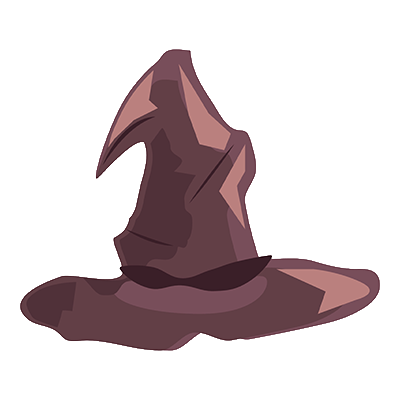
The solution was an old hat belonging to Godric Gryffindor. All four founders enchanted it with enough of their knowledge and judgment to identify the qualities they valued in future students. Centuries later, the same Sorting Hat still places every new Hogwarts pupil into one of the four Houses at the start-of-term feast.
The Founders’ Relics and What Became of Them
The founders disappeared into history, but several objects associated with them survived. Much later, those relics became unexpectedly important in the struggle against Lord Voldemort.
Godric Gryffindor’s Sword and Sorting Hat
Gryffindor’s sword was made by the goblin silversmith Ragnuk the First. Because goblin-made silver takes in substances that strengthen it, the sword later absorbed Basilisk venom after Harry Potter used it in the Chamber of Secrets. That gave the blade the ability to destroy Horcruxes.
Gryffindor’s old hat had an even longer career. Enchanted by all four founders, it became Hogwarts’ Sorting Hat and remained part of the school long after the founders themselves were gone.
Helga Hufflepuff’s Cup
Helga Hufflepuff owned a small golden cup marked with a badger. It passed through her descendants until it eventually came into the collection of Hepzibah Smith. Tom Riddle coveted the artifact because of its connection to Hogwarts and later transformed it into one of his Horcruxes.
Rowena Ravenclaw’s Diadem
Ravenclaw’s diadem was said to enhance the wisdom of its wearer. Her daughter Helena stole it and hid it in Albania, where it remained lost for centuries. Tom Riddle eventually persuaded Helena’s ghost to reveal its location and turned the diadem into another Horcrux before hiding it back inside Hogwarts.
Salazar Slytherin’s Locket
Slytherin’s golden locket passed down through his family and eventually reached the Gaunts, Tom Riddle’s maternal relatives. After disappearing from the family, it too found its way to collector Hepzibah Smith. Voldemort later recovered it and made it a Horcrux, tying his own quest for immortality directly to the founder he regarded as his ancestor.
A Timeline of Hogwarts History
A thousand years is a great deal to fit onto one roll of parchment. These are some of the major moments that changed the school, its traditions, or the people inside it.
Hogwarts Is Founded
Godric Gryffindor, Helga Hufflepuff, Rowena Ravenclaw, and Salazar Slytherin establish Hogwarts in the Scottish Highlands and create the four Houses that still bear their names.
The Sorting Hat Becomes Tradition
As the founders grow older, they enchant Godric Gryffindor’s hat so that future generations can continue sorting students according to the principles of the four Houses.
Slytherin Leaves
Salazar Slytherin breaks with his fellow founders over the admission of Muggle-born students. He leaves Hogwarts, while the Chamber of Secrets and its Basilisk remain hidden beneath the castle.
The Triwizard Tournament Begins
Hogwarts, Beauxbatons Academy of Magic, and Durmstrang Institute establish the Triwizard Tournament. Traditionally held every five years, the competition selects one champion from each school to face three magical tasks.
The Castle Evolves
As Hogwarts adopts more elaborate plumbing, construction threatens the original entrance to the Chamber of Secrets. Corvinus Gaunt, a student descended from Slytherin, secretly ensures that the Chamber remains accessible through the new system.
The Triwizard Tournament Falters
All three champions are injured during the 1792 Tournament. After mounting injuries and deaths across its history, the centuries-old competition eventually falls into a long hiatus.
Tom Riddle Opens the Chamber
Hogwarts student Tom Riddle discovers the Chamber of Secrets and releases its Basilisk. Student Myrtle Elizabeth Warren is killed, and the school faces the possibility of closure. Riddle frames Rubeus Hagrid for the attacks, resulting in Hagrid’s expulsion.
The Chamber Opens Again
Tom Riddle’s enchanted diary manipulates Ginny Weasley into reopening the Chamber. Several inhabitants of Hogwarts are Petrified before Harry Potter reaches the Chamber, kills the Basilisk with the Sword of Gryffindor, and destroys the diary.
Hogwarts Hosts the Triwizard Tournament
After roughly two centuries without a Tournament, Hogwarts welcomes students from Beauxbatons and Durmstrang for its revival. The year ends in tragedy when the Triwizard Cup is turned into a Portkey, Cedric Diggory is killed, and Lord Voldemort returns.
The Ministry Tightens Its Grip
Dolores Umbridge arrives as Defense Against the Dark Arts professor and later gains sweeping authority as Hogwarts High Inquisitor. New decrees restrict student life and staff independence, prompting Harry Potter and other students to secretly form Dumbledore’s Army.
Albus Dumbledore Dies
Death Eaters enter Hogwarts through a Vanishing Cabinet connected to Borgin and Burkes. The attack culminates atop the Astronomy Tower, where Severus Snape kills Headmaster Albus Dumbledore.
Hogwarts Falls Under Voldemort’s Regime
Severus Snape becomes Headmaster while Alecto and Amycus Carrow impose brutal new lessons and punishments. Students including Neville Longbottom continue resistance inside the school, eventually using the Room of Requirement as a refuge.
The Battle of Hogwarts
Harry Potter returns to the castle while searching for one of Voldemort’s Horcruxes. Hogwarts staff, students, members of Dumbledore’s Army, the Order of the Phoenix, and other allies defend the school against Voldemort’s forces. The battle claims numerous lives but ends with Voldemort’s defeat.
Has Hogwarts Always Looked and Worked the Same?
Definitely not. A castle that has been occupied for a millennium collects renovations, protections, traditions, mysteries, and magical oddities along the way.
The Castle Was Built to Stay Hidden
Hogwarts has long been protected from Muggle discovery. The school is unplottable and surrounded by magical defenses, while enchantments prevent ordinary visitors from simply wandering onto the grounds. Secrecy was part of Hogwarts from its earliest days rather than a later addition.
Even the Chamber of Secrets Had to Survive Renovations
The Chamber’s original access route predated Hogwarts’ later plumbing. When bathrooms and pipes threatened its entrance in the eighteenth century, Slytherin descendant Corvinus Gaunt secretly preserved access to the chamber. By Harry’s time, its entrance was concealed within a girls’ bathroom and opened through Parseltongue.
No Headteacher Has Known Every Secret
Hogwarts contains hidden rooms, disappearing spaces, secret passages, unusual staircases, and magic that even its most knowledgeable residents do not fully understand. Albus Dumbledore himself acknowledged that the castle still held secrets unknown to him.
Hogwarts Survived the Wizarding Wars
The castle became increasingly entangled in the conflict with Voldemort and was ultimately turned into a battlefield in 1998. Hogwarts nevertheless survived. Years later, another generation of students would once again depart from Platform Nine and Three-Quarters for the school.
Hogwarts History You Can Still See Around the Castle
At Hogwarts, history is not locked away in a museum. Much of it is still wandering, talking, singing, guarding doors, or hanging on the walls.
The Sorting Hat
One of the founders’ own enchanted objects still performs the same essential job at Hogwarts every September.
The House Ghosts
Helena Ravenclaw and the Bloody Baron link the modern school directly to tragedy from the founders’ own era, while every House has centuries of ghostly history.
The Four Houses
Students still sleep, study, compete, and form communities within institutions created by Gryffindor, Hufflepuff, Ravenclaw, and Slytherin a millennium ago.
Portraits
Generations of former headteachers and other witches and wizards remain present through magical portraits, turning Hogwarts itself into a kind of living archive.
Ancient Rooms
The Chamber of Secrets, founders’ common rooms, dungeons, towers, and countless hidden spaces preserve different layers of the castle’s past.
Traditions
Sorting, House competition, start-of-term feasts, school ghosts, and countless smaller customs connect each incoming class to generations of students before them.
You’re Part of the History Now
Hogwarts can feel timeless when you first enter the Great Hall, but the castle has never actually stood still. Its founders disagreed. Its rooms changed. Its students challenged the rules. Its headteachers shaped different eras. Parts of its history were hidden for centuries before someone finally stumbled across them.
So when a staircase sends you to the wrong floor or a portrait tells you something that sounds suspiciously like gossip, pay attention. At Hogwarts, today’s inconvenience has a habit of becoming tomorrow’s History of Magic lesson.
About MuggleNet: MuggleNet has covered the Wizarding World since 1999, offering news, guides, editorials and fan resources for readers around the world.